LEEP stands for Loop Electrosurgical Excision Procedure, a treatment that prevents cervical cancer. A small electrical wire loop is used to remove abnormal cells from your cervix. LEEP surgery may be performed after abnormal cells are found during a Pap test, colposcopy, or biopsy.
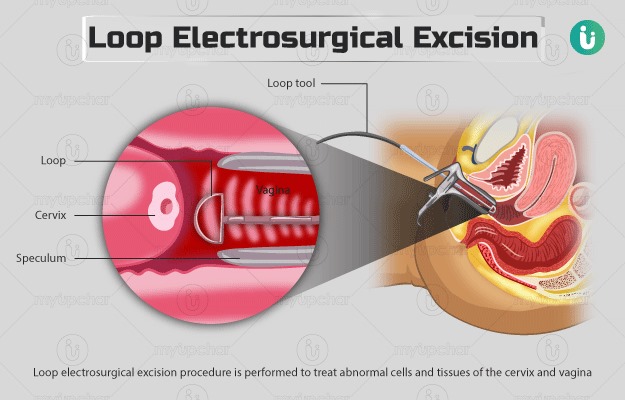
To do a LEEP, you’ll lie down on an exam table like you would for a Pap test. Your doctor or nurse will put a speculum into your vagina and open it. This separates the walls of your vagina, so they can see your cervix.
Once your doctor or nurse can see your cervix, they’ll apply numbing medicine to it. Then they’ll use a small tool with an electrical wire loop to remove the abnormal cells. Then your blood vessels in the area will be sealed to prevent bleeding. They might also use a special paste called Monsel’s Solution to prevent bleeding. The cells are sent to a lab to be tested.
A LEEP may take about 10 minutes. And no, getting a LEEP doesn’t hurt; rather, you may feel mild discomfort or cramping, and you won’t feel cutting or heat from the loop. Because numbing medicines are used, a lot of people don’t feel anything at all.
Getting a LEEP is very effective because it removes all abnormal cervical cells most of the time. If the LEEP doesn’t remove all the abnormal cells, you may have to have LEEP again, or your doctor or nurse may recommend more tests or a different treatment.
After LEEP, you may rest for a few minutes after the procedure before going home.
You may want to wear a sanitary pad to prevent bleeding. It is normal to have some mild cramping, spotting, and dark or black-colored discharge for several days. The dark discharge is from the medicine applied to your cervix to control bleeding.
You can get LEEP at your doctor or nurse’s office, some community health clinics, or your local Planned Parenthood health center.
Source: Ghana/MaxTV/MaxFM/max.com.gh/Belinda Quansah