

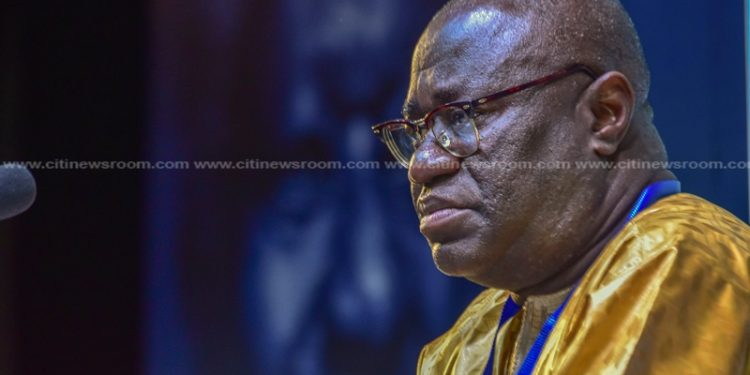
Security analyst, Prof. Kwesi Aning, says the yet-to-be constituted team tasked to conduct a public enquiry into the disturbances at Ejura in the Ashanti Region should include relevant bodies for a better outcome and assessment.
Speaking he said, “this probe or enquiry that is going to be established must not only have government people. I think it must have a broad stakeholder group who will bring the expertise of solving the ever-changing challenges that we are facing.”
“I hope that the terms of reference of this enquiry will be broad enough to capture the multiple dynamics that we are experiencing,” he emphasized.
He also questioned the processes and mechanisms used for the deployment of military and police officers to quell the disturbances at Ejura.
Mr. Aning said what appears to be the usage of lethal force by security agencies in dealing with protesters is becoming one too many and must be thoroughly checked.
“The Ejura issue is just symptomatic of a broader problem with the use of law enforcement, gun usage, command, and control”, Prof. Aning noted on Wednesday, June 30, 2021.
Two persons died from gunshot wounds while protesting to demand justice for the killing of a social activist, Ibrahim Mohammed at Ejura.
Videos capturing the events show military officers deployed to the scene shooting directly into the crowd. Four persons also sustained injuries from the shooting incident.
This deployment, Prof. Aning, who is also the Director, Faculty of Academic Affairs & Research, Kofi Annan International Peacekeeping Training Centre, believes must be investigated because it was an extreme course of action.
“I am more interested in the processes and mechanisms and decision-making, how the assessments were done in terms of threats and response leading to the military appearance followed by the police at the scene. They see an enemy, and they want to feed on that enemy in dealing with the crisis”, he said.





